THE PALMISTRY STUDIO
A little curiosity.
A world in
your hands.
Slow down. Look closely. Explore the traditional language of palm lines, shapes, and markings—one small discovery at a time.
A visual guide for reflection, storytelling, and curiosity.
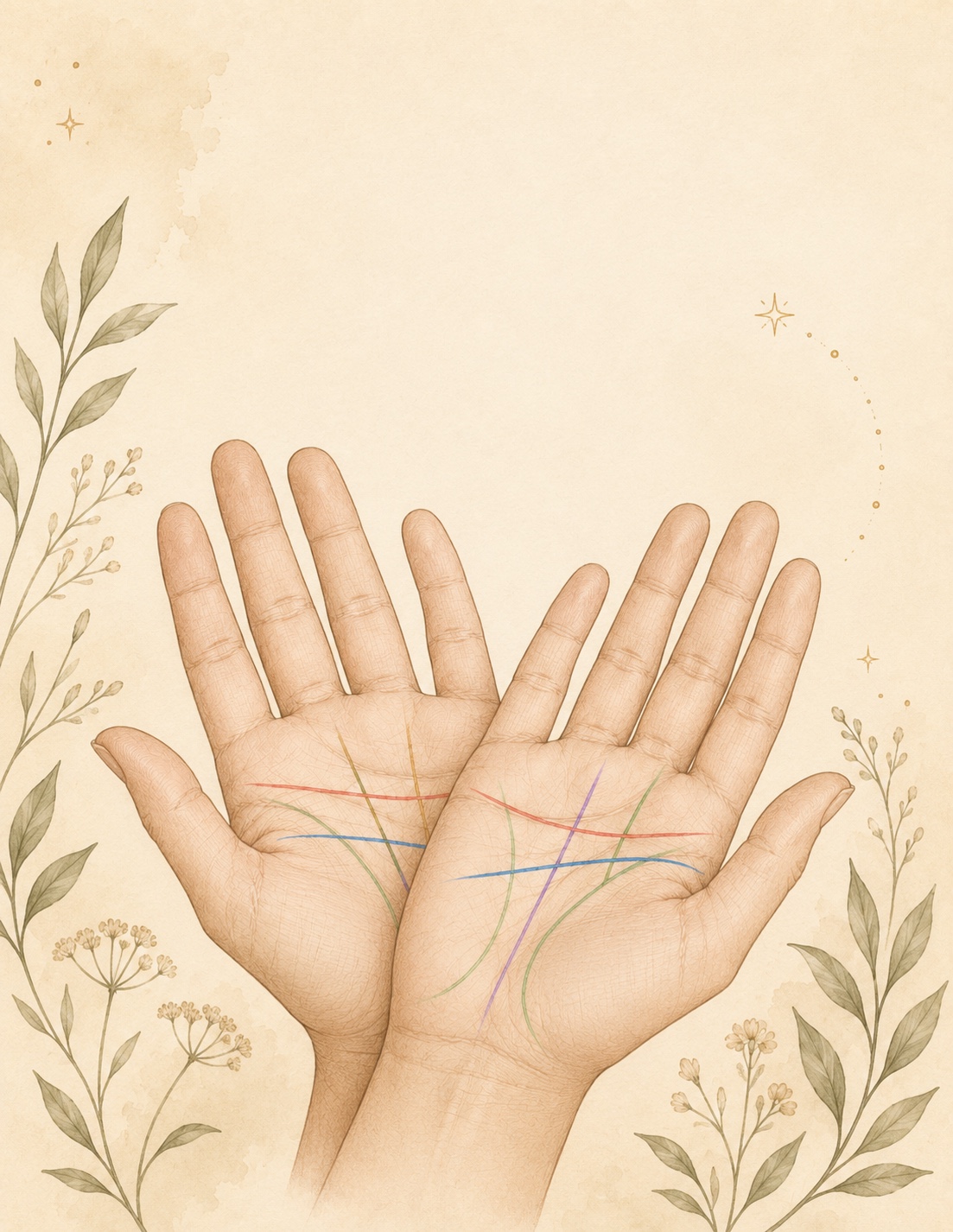
Observe first. Interpret gently. Palmistry is a symbolic tradition, not a scientifically validated way to determine health, character, or the future.
Our approach01 / FIND YOUR BEARINGS
Begin with the whole hand.
Good light, a relaxed palm, and an open mind. There is no need to find every line or fit every description.
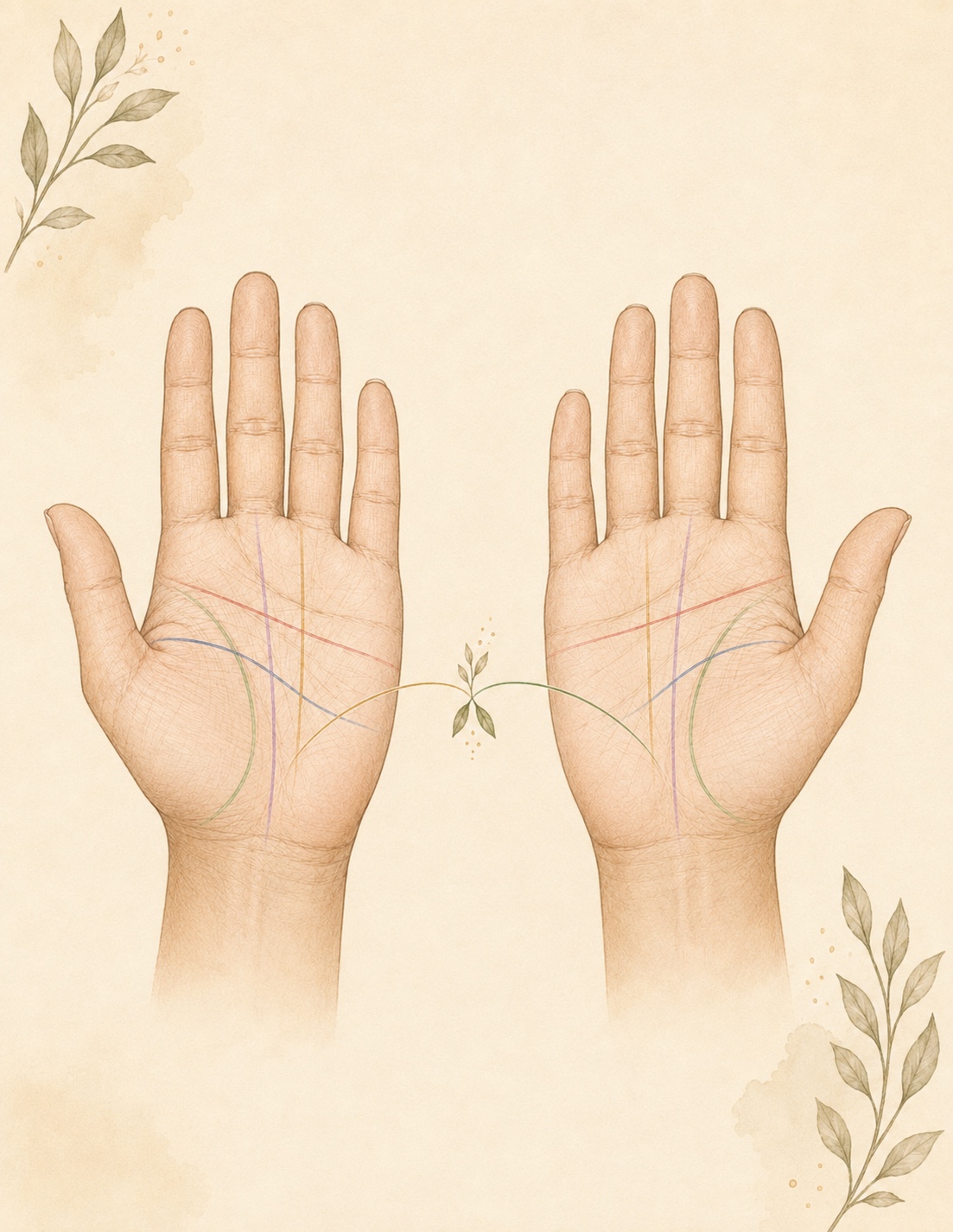
Let the hand rest naturally.
Use soft side-lighting. Avoid stretching the fingers or pressing the palm flat; both can change how creases appear.
Compare both hands.
One modern tradition treats the dominant hand as developed habits and the non-dominant hand as earlier patterns. Schools differ; use the comparison symbolically.
Look for a pattern, not a prediction.
Notice several features together. A faint line, a break, or an absent marking is not inherently negative.
A question to carry with you: Where has experience reshaped a familiar response?
02 / THE INTERACTIVE ATLAS
Follow your curiosity.
Choose a map, then tap a numbered point or a name. Each detail opens a small window into the tradition.
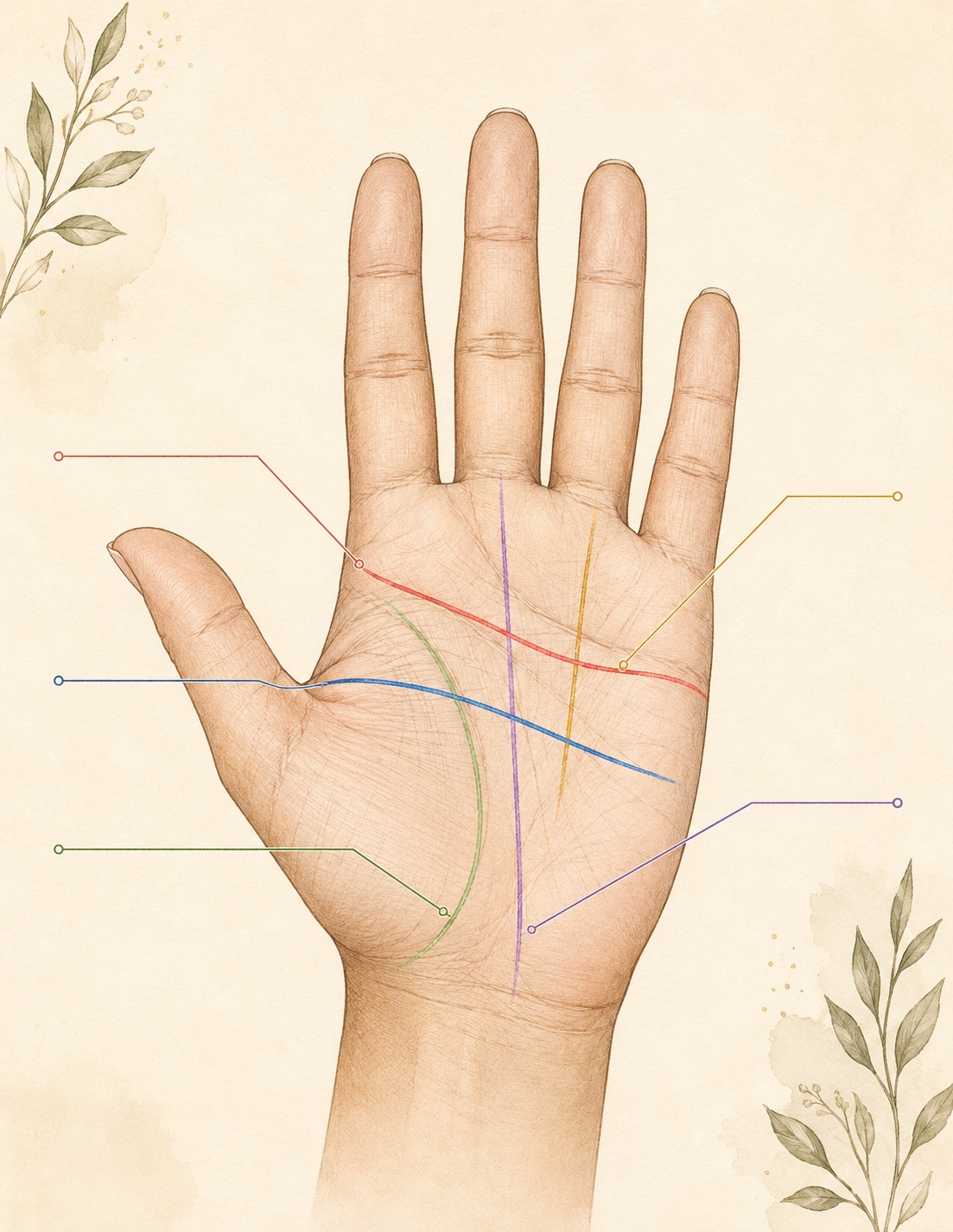
Schematic locations. Natural palms vary.
03 / SHAPE & EXPRESSION
More than a single line.
Hand shape, proportions, and natural movement add another layer. Most hands combine more than one pattern.
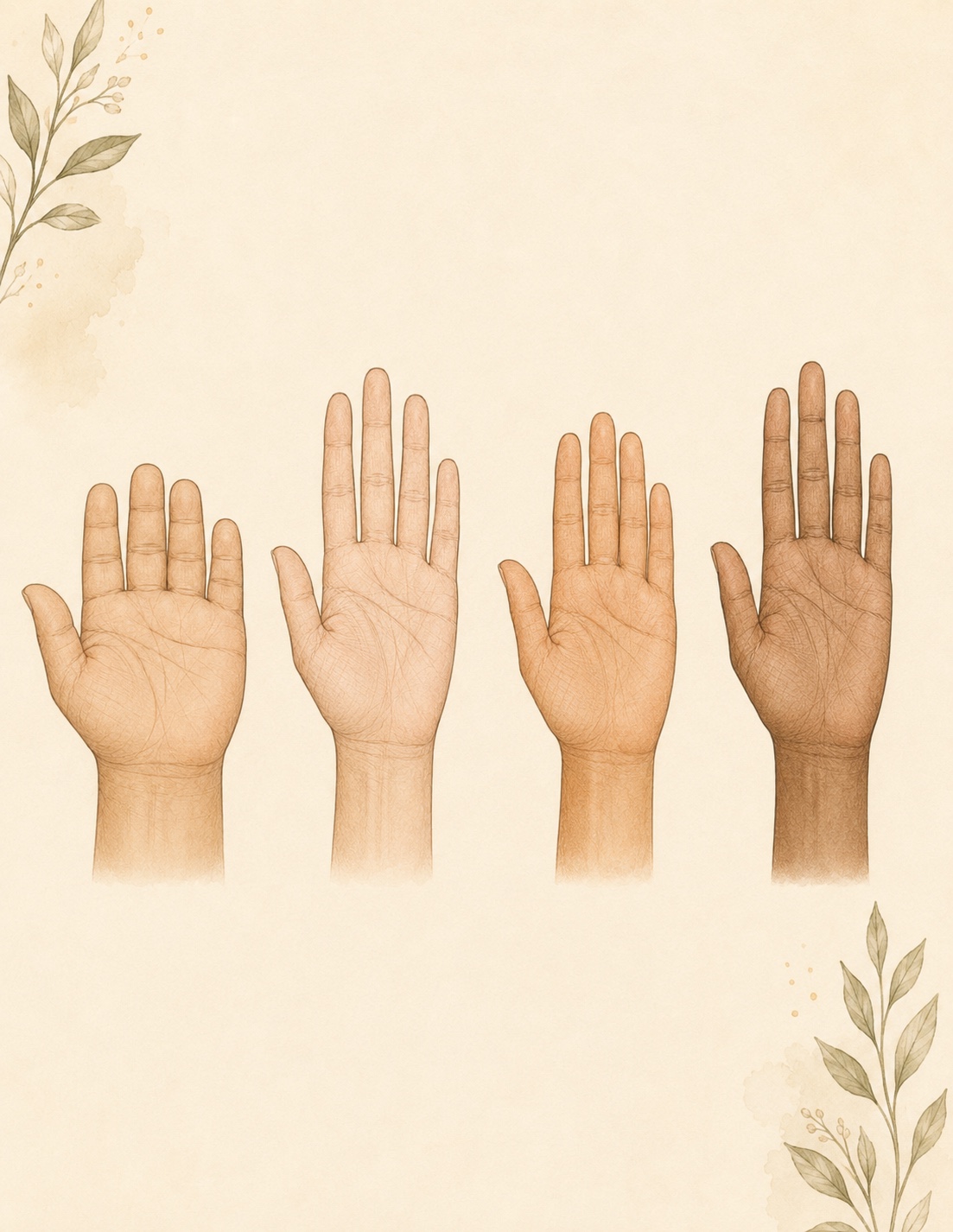
These are conversation starters, not personality tests. Shape, calluses, flexibility, and scars can reflect genetics, work, disability, injury, age, and environment.
Fingers, the thumb, and the details in between
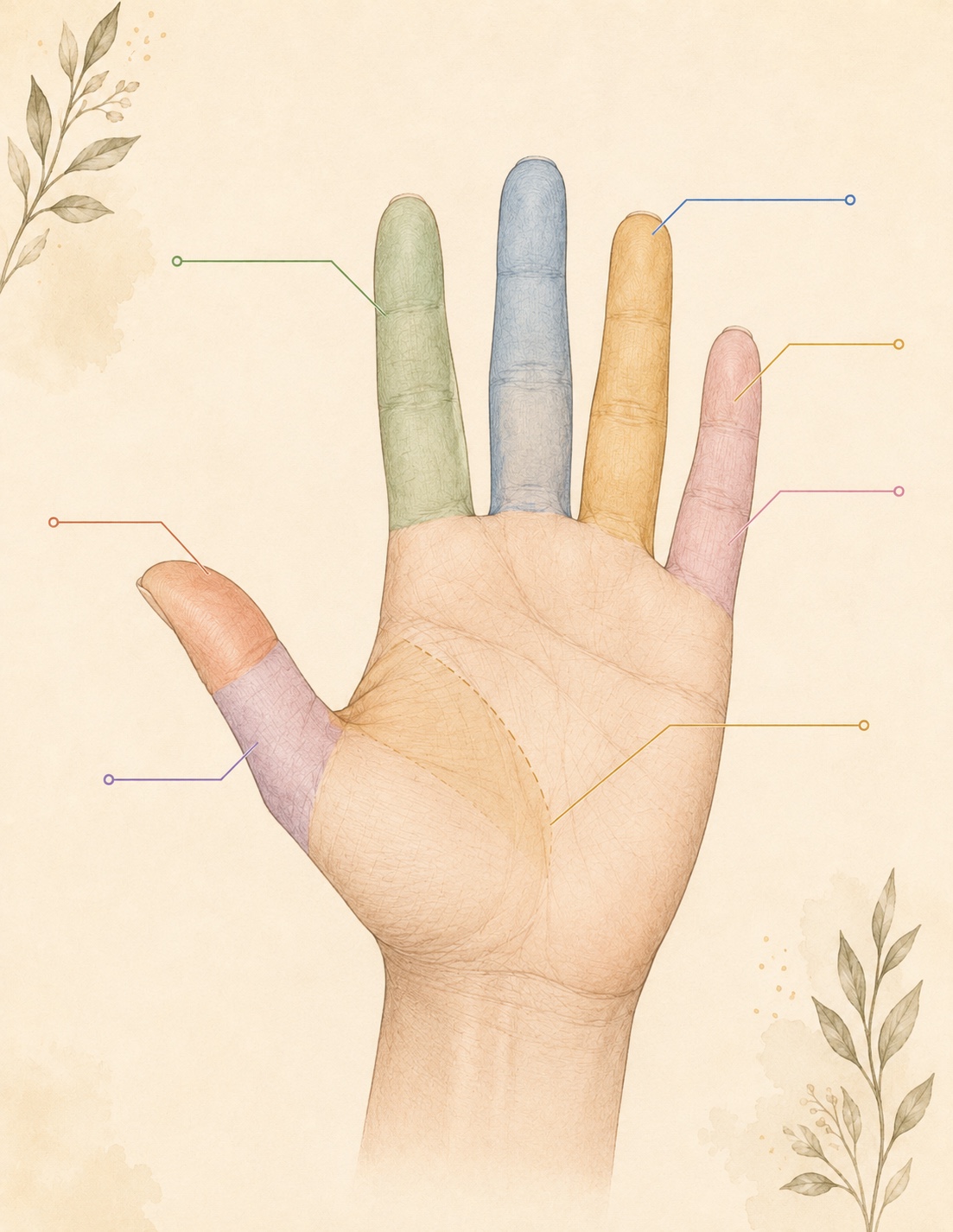
- Index / Jupiter · green
- Aspiration, confidence, and authority.
- Middle / Saturn · blue
- Duty, responsibility, and boundaries.
- Ring / Apollo · gold
- Creativity, expression, and risk.
- Little / Mercury · rose
- Communication and negotiation.
- Upper thumb · orange
- Will and follow-through.
- Lower thumb · purple
- Reasoning and judgment.
A wider natural thumb opening is traditionally linked with openness; a closer angle with caution. Flexibility suggests adaptability, firmness suggests consistency. Neither is inherently better.
Do not use nail color or skin texture to diagnose health.
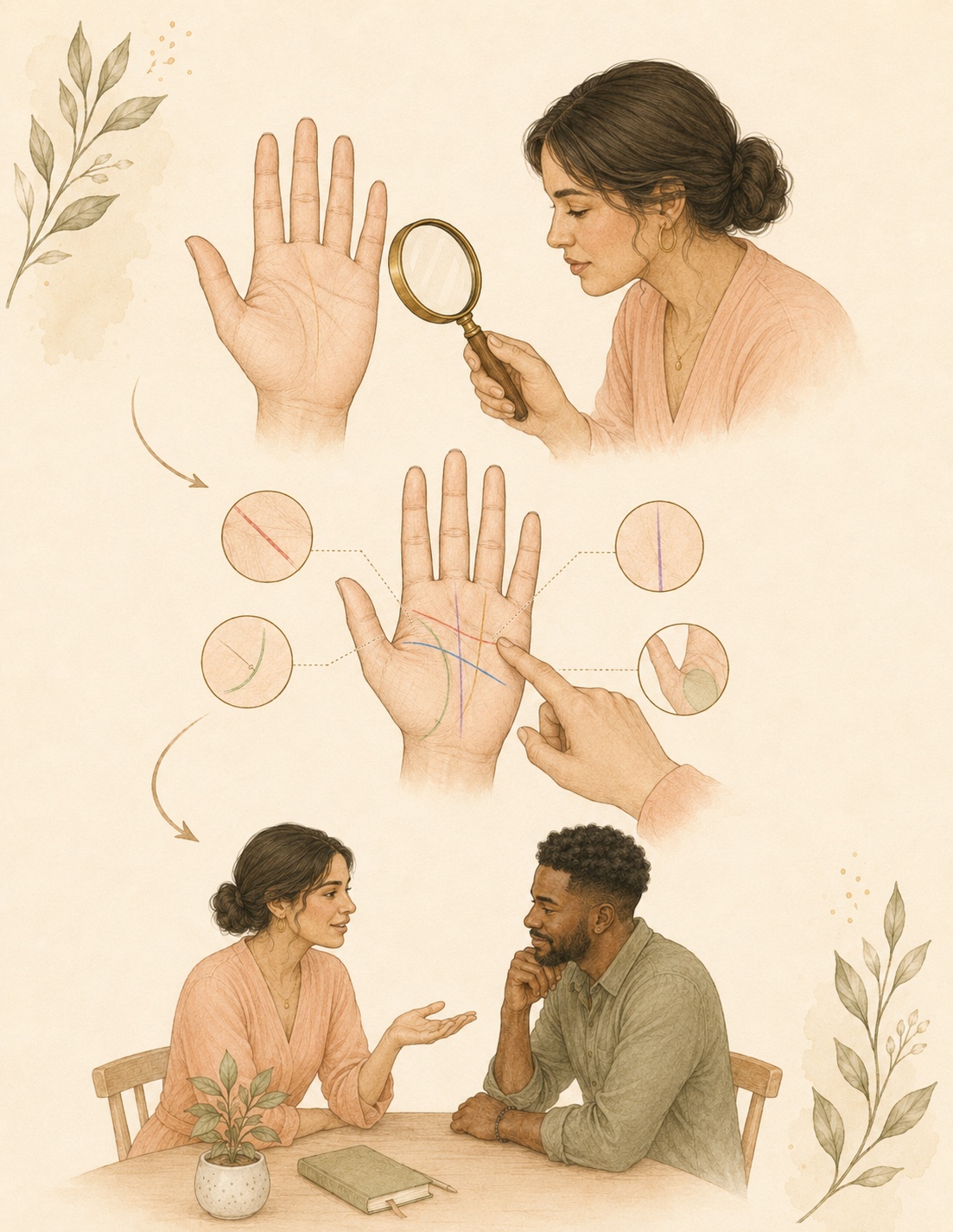
04 / A THOUGHTFUL PRACTICE
Notice.
Connect.
Ask.
A respectful reading leaves room for the other person’s story. Follow these eight steps at your own pace.
05 / YOUR PRACTICE JOURNAL
What do you notice?
Write what is visible first, then explore a possible theme. The two do not have to become the same thing.
No account or palm upload is needed. Notes are saved only in this browser; clearing site data removes them. Download a copy to keep.
A NOTE ON THE TRADITION
Curiosity without certainty.
No single mark predicts death, illness, betrayal, marriage, or fertility. Timing systems differ and are not scientifically reliable. Meanings vary across schools and cultures.
Keep a reading voluntary and private. Never use it to pressure someone about medical care, money, relationships, or legal choices—or to give a child a fixed destiny.
“One possible reading is…
Does that resonate with you?”